Silicon Valley Oral History Project

Introduction

The leaders of Silicon Valley are among the most frequently interviewed and quoted people on the planet. At first glance, this makes an oral history collection redundant at best, and a waste of resources at worst. However, there interviews are currently unorganized, ill-preserved, and lost to future researchers; rarely do they make the transition from private resources of use to individuals to public records accessible to the entire scholarly community.

SiliconBase has the opportunity to develop an oral history project that drew on the work of established scholars, added value to their work in the form of transcription and other serviced, and created a permanent collection of interviews that would be useful to both current and future documentarians and scholars. By developing an "open source" model for organizing and coordinating oral history efforts, we can serve as a model for how digital resources can be used by a scholarly community to create intellectual capital. Further, in a digital environment we could develop a rich combination of video and audio interviews linked to annotated transcripts, primary documents, and other interviews. It could serve as a repository for interviews conducted by other researchers. Finally, the project would provide useful PR and contacts for SiliconBase and the Stanford University Library, creating opportunities for future collections development.

The virtues of a collection

Present oral history efforts are unorganized

While thousands of interviews have been conducted with everyone from assembly-line workers and hackers to CEOs, all but a tiny percentage of those interviews remain private property, inaccessible to the general public and future scholars. In principle they are voluminous; in reality they are uncollected, unorganized, for all intents and purposes unavailable.

Researchers are not necessarily reliable curators of their own interviews. Few researchers have the time or resources necessary to produce complete, archival-quality transcripts. Variability in recording format, transcription methods, and uncertainty regarding copy-editing or verification can discourage future researchers from using old interviews. Worst of all, once used in a research project, interviews are often either destroyed, lost, or degrade through neglect.

At present, there are no facilities that can serve as repositories for such interviews, nor are other institutions conducting their own oral histories with Silicon Valley leaders. The Regional Oral History Office at U.C. Berkeley has a few interviews with people involved in the development of the California computer industry. The Tech Museum has conducted more, but they are rather short, and aimed at youngsters. The California History Center's oral history program concentrates on Santa Clara agriculture.

In short, SiliconBase has an opportunity to serve as a trendsetter, both in development and preservation of oral histories of Silicon Valley.

Oral history as an historical resource

Oral histories can preserve some of the facts lost with destroyed documents

Pieces of the history of Silicon Valley are lost every day, as companies throw out records, data files are destroyed, and the Valley's pioneers retire. Oral history can fill some of the gaps caused by destruction of primary records.

Oral histories can supplement the documentary record

Printed documents are the only sources historians need to consult when writing official or organizational histories; but much of the history of Silicon Valley takes place off the record. Personal networks, informal gatherings, and conversation have been important to the Valley's everyday business life since its creation. Interviews can help us reconstruct those networks, and record key moments in careers, business deals, and product development that otherwise would be lost.

Further, some of the most interesting questions about the Valley concern its culture and social norms. These by definition are unwritten: at best they leave indirect traces. Interviews are often the only way to gather direct information about values, attitudes, motives, and corporate and regional culture.

Oral histories are popular

Oral history has gained legitimacy as an historical resource among scholars in history, anthropology, and sociology (the major communities working on Silicon Valley); it also enjoys an enduring popularity with journalists, film-makers, students, and the public at large. Video oral histories can be leveraged by teachers into course Web sites, multimedia developers into CDs, journalists and producers into news reports and documentaries. While our archives of primary documents should be our highest priority, an oral history program will offer significant publicity benefits.

SiliconBase's interview program

The Silicon Valley Oral History project will be notable for the involvement of outside scholars and journalists; its encouragement of common interview questions and methods; its attention to production values; and exploitation of opportunities created by digital publication of interviews in the SiliconBase environment.

Researcher involvement

In keeping with our mission to serve as a research and electronic publishing resource of use to the entire scholarly community, I propose to collaborate with scholars working on Silicon Valley in our project. Doing so will give us access to the skills and connections other researchers have already developed, build the archive more quickly than we could were we to work alone, and give us some useful visibility within the scholarly community.

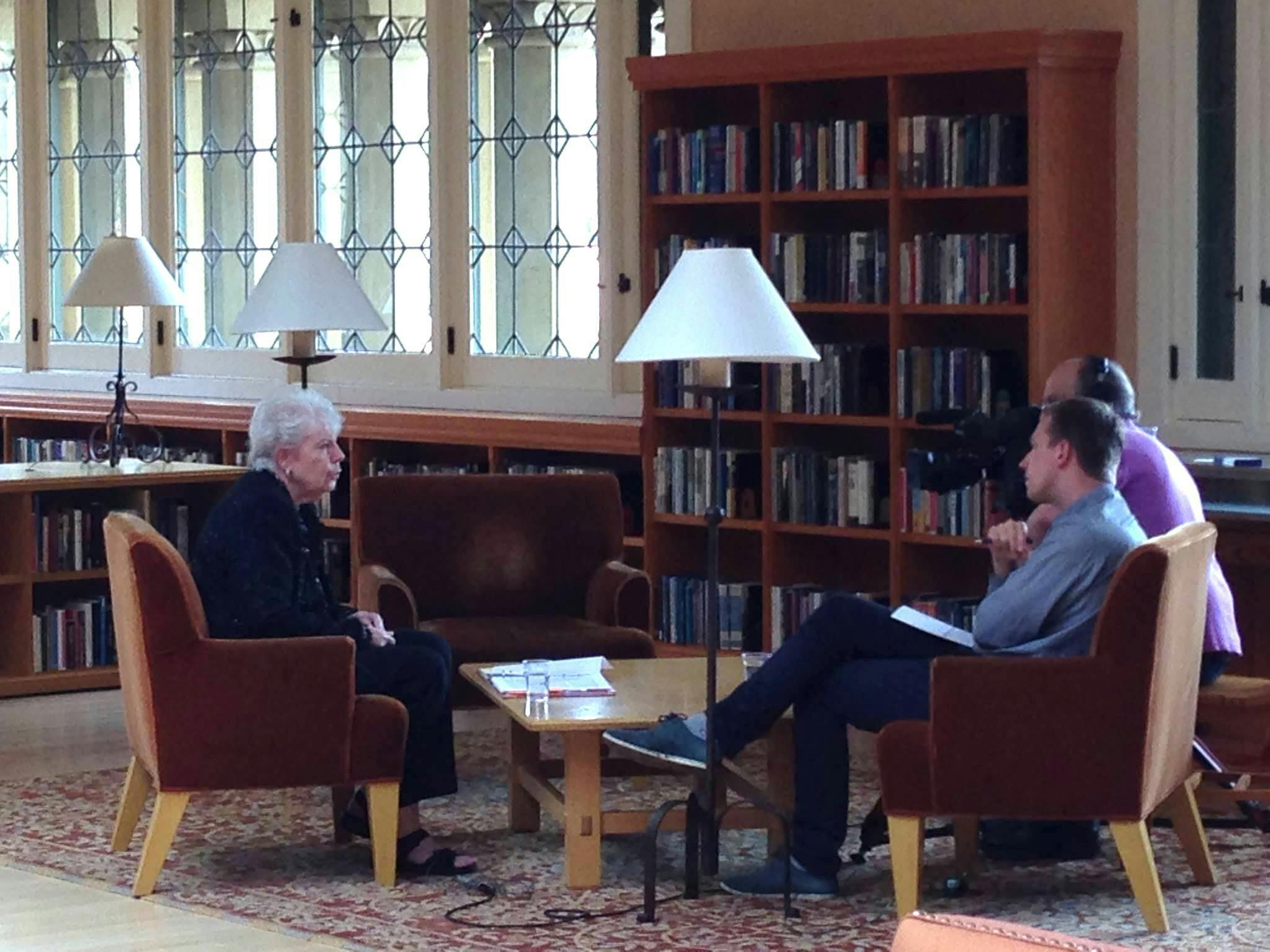
In this arrangement, we would arrange studio time for interviews, handle transcription, and oversee archiving and electronic publishing for researchers. In return, interviews would follow SiliconBase content and technical standards, and occasionally would be conducted jointly by SiliconBase staff and our affiliates. Stanford would have copies of the interviews in their original medium, and own the rights to publish them.

Such an arrangement would strike a balance between the needs of SiliconBase, while preserving the basic independence of researchers, and turning interviews from ephemeral, private resources into permanent, public ones. For researchers, it would have the added benefit of providing them with additional publications (albeit unconventional ones), and their cooperation might make them more competitive for their own research grants. Tim and I have spoken with Martin Kenney, a UC Davis researcher who's writing a book on Silicon Valley and has already interviewed a number of people working in venture capital. I've also met with Lawrence Friedman, a Law School professor who's written a study of legal practice in Silicon Valley. Both have expressed interest in being involved in the project. Kenney has been thinking about doing an organized series of interviews with venture capitalists from some time, and Friedman would like to bring his 1980s work on Silicon Valley law up to date.

Standardization

Researchers often structure their interviews around specific project interests, rather than creating documents that can be of use to researchers working on a variety of subjects. We can encourage standardization in our recording methods (using video wherever possible), develop a common set of interview questions, and protocols for soliciting review of transcripts and further information.

This will give our interviews a unified look and feel; make it easier for researchers to compare responses to questions about personal information and careers, accounts of the founding and growth of companies, expansion of markets, and controversies; and provide the collection with a depth that it would not possess if it consisted of the same number of interviews conducted separately.

Interview a variety of Silicon Valley leaders

In addition to the "usual suspects" of CEOs, entrepreneurs, and technologists, we will interview key figures in supporting industries. These will include venture capital and angel investing; advertising, marketing, and corporate PR; journalism; architecture and construction; attorneys working in major Silicon Valley firms, corporate house counsels, and in copyright and intellectual property; local politicians; and educators at Stanford, Berkeley, San Jose State, and peninsula community colleges with ties to local industry.

In addition to providing a more complete documentary record of the history of the Valley, the act of bringing together a wide variety of resources that can be accessed through a single set of search and browsing tools, and offering users dozens of responses to queries, will make SiliconBase more valuable.

Develop a workflow for transcribing and publishing interviews

Too many oral history projects stumble, and condemn themselves to irrelevance, by devoting too little attention to creating finished transcriptions of interviews. Transcriptions useful as primary resources to print journalists and conventional scholars. Video and film producers use transcripts to search tapes for interesting quotes. Video search and retrieval tools that rely on keyword or text-based searching will rely on transcripts to conduct their searches.

Thus a key feature of the Silicon Valley Oral History project should be the creation of a standard workflow for transcribing, editing, cataloging, and publishing interviews. Because this is an expensive process ($100/hour of tape is what oral historians estimate it costs to transcribe interviews), we will experiment with speech-recognition software to see what opportunities exist for automating portions of the transcription process. Further, working with colleagues in SCPD's video and multimedia division, I will explore the opportunities created by the recent development of digital video for streamlining the production process and creating more permanent records of interviews.

Funding sources

There are several sources of public and private funding we could approach to support the Silicon Valley Oral History project.

Document created on 9 September 1999;