Herbie Hancock’s V.S.O.P.: 1960s and '70s Jazz Reunified
In the summer of 1976, the Newport Jazz Festival felt less like a celebration and more like a crossroads. With synthesizers filling the sonic space, fusion was the law of the land, and Herbie Hancock was one of its preeminent architects. Having spent the early '70s warping minds with the cosmic funk of the Headhunters, Herbie’s return to an (almost) purely acoustic quintet for a one-off performance at City College’s Aaron Davis Hall felt like a glitch in the Matrix. This live recording, V.S.O.P. (Very Special One-time Performance), captures a titan of the keys momentarily glancing in the rearview mirror, only to realize that the past wasn’t behind him—it was fueling a brand-new engine of Afro-modernity.
V.S.O.P. is a live recording of three sets, each by a different group of musicians. At its heart, however, lies the reunited mid-'60s Miles Davis Quintet—minus Miles, with Freddie Hubbard stepping into the brass vacuum. From the first downbeat of Herbie’s classic “Maiden Voyage,” there is a startling sense of interconnectedness between the instrumental parts. Ron Carter’s bass is a tectonic plate, shifting with a gravity that grounds the ethereal, fluttering cymbal work of Tony Williams. When Freddie’s trumpet pierces the veil, it isn’t with the muted, cool detachment of Miles, but with a muscular, brassy bravado that forces the rhythm section into a more aggressive stance. Herbie himself opts for an amplified Yamaha Electric Grand rather than an acoustic piano, embracing the plugged-in urgency of the '70s. Even when the band brings down the heat in a swinging rendition of Wayne Shorter’s “Nefertiti,” this urgency continues to simmer and boil as the horns continually repeat the melody while the rhythm section explores every dynamic shadow. It’s “post-bop” not as a dusty museum category, but as a live wire, sparking with the tension of five artists who know exactly where the cliff’s edge is and choose to dance right on it.
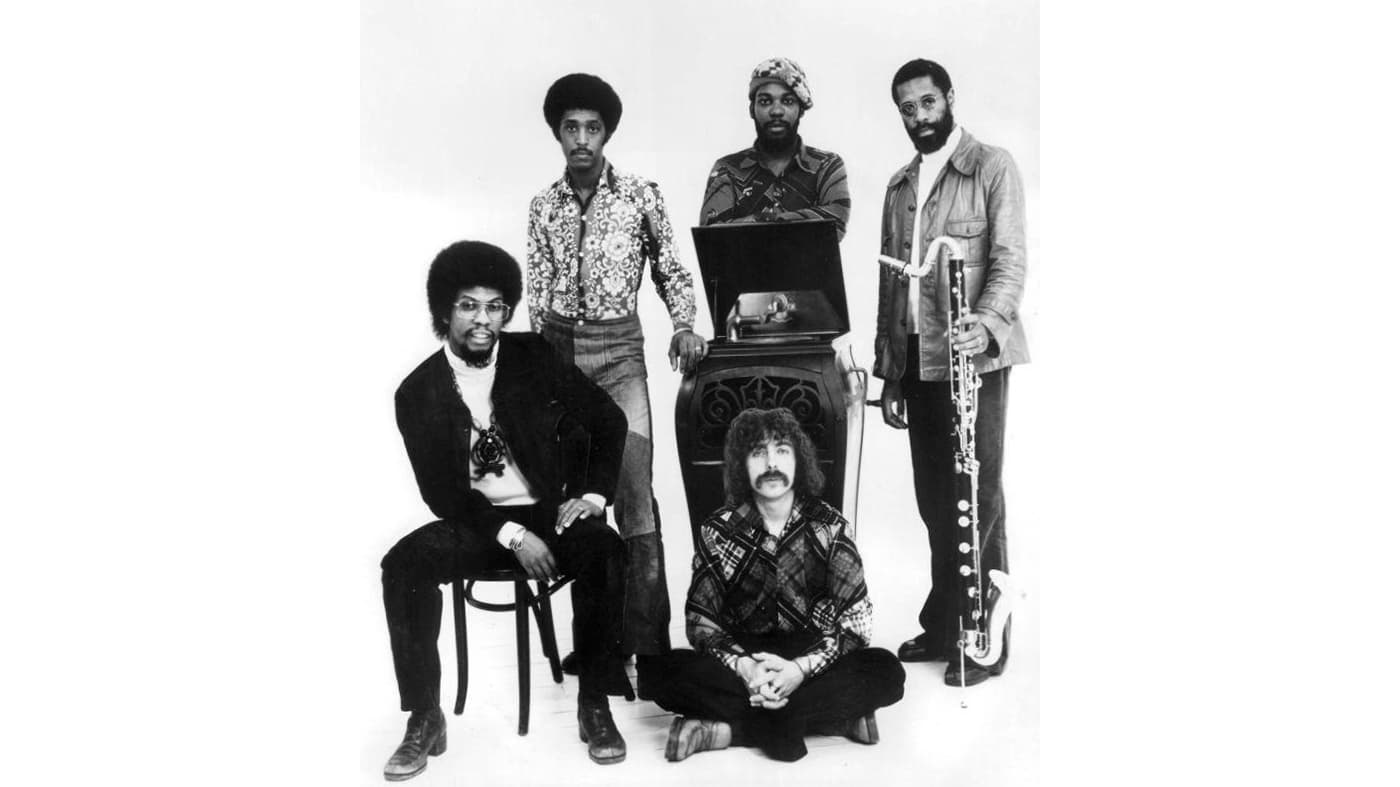
This technical evolution mirrors the album’s deeper engagement with Afro-modernity. V.S.O.P. isn't just a career retrospective; it is an assertion of Black intellectual and spiritual autonomy—an application of cutting-edge machinery to rewire the future of Black music. This is most explicitly felt during the set featuring the Mwandishi-era lineup. Here, the musicians don’t just play; they inhabit personas defined by their adopted Swahili names—Mwandishi (The Composer/Herbie), Mwile (The Body/Bennie Maupin), and Jabali (“strong as a rock”/Billy Hart). These names are a strategic play, a way to swap out the identities handed to them for a Pan-African identity they built themselves, bridging where they came from with where they were heading. The music reflects this: it is expansive, modal, and stubbornly resistant to Western “swing” conventions, opting instead for a communal, polyrhythmic texture.
What makes V.S.O.P. essential isn’t just the nostalgia; it’s the audible friction between where these musicians had been and where they were going. Hancock’s piano playing here is particularly revelatory. Even when he is seated at the electric grand, you can hear the “fusion” mindset bleeding into his touch. His chords are dense, clustered, and rhythmically jagged—he’s playing the piano like a percussion instrument, a style sharpened by years of funk. On tracks like “Nefertiti,” the melody doesn’t just flow; it spirals. The quintet treats the theme as a recursive loop, building a pressure cooker of sound that never quite explodes, opting instead to simmer with a terrifying intensity.
Ultimately, V.S.O.P. argues that “acoustic” does not mean “conservative” and “modern” does not mean “disconnected.” While the jazz world in 1976 was fractured between the avant-garde, the traditionalists, and the chart-topping fusion stars, this record proved that the language of the '60s was still the most flexible tool for expression. It is a masterclass in collective improvisation where the “soloist” is often an afterthought to the “groove.” By the time the set closes, you realize you haven’t just heard a reunion; you've heard a declaration. Hancock and his cohorts weren’t reclaiming their youth; they were reminding us that in the right hands, the fusion of African heritage and technological innovation creates a sound that is, quite literally, timeless.
Isaac Goodman (‘26) is majoring in physics with minors in music, comparative literature, and math.
This article is part of a series highlighting albums in Stanford’s Dijkstra Black Music Collection. The series was written by students in Music 147U: Identity, Difference, Sound, under the supervision of Ioanida Costache and John Fath. We are grateful to Nathan Coy, the entire ARS staff, Ray Heigemeir, Tamar Barzel, and Rochelle Lundy for their support of this work.