Making the News: Recordings of Broadcast Journalist Reese Erlich Available
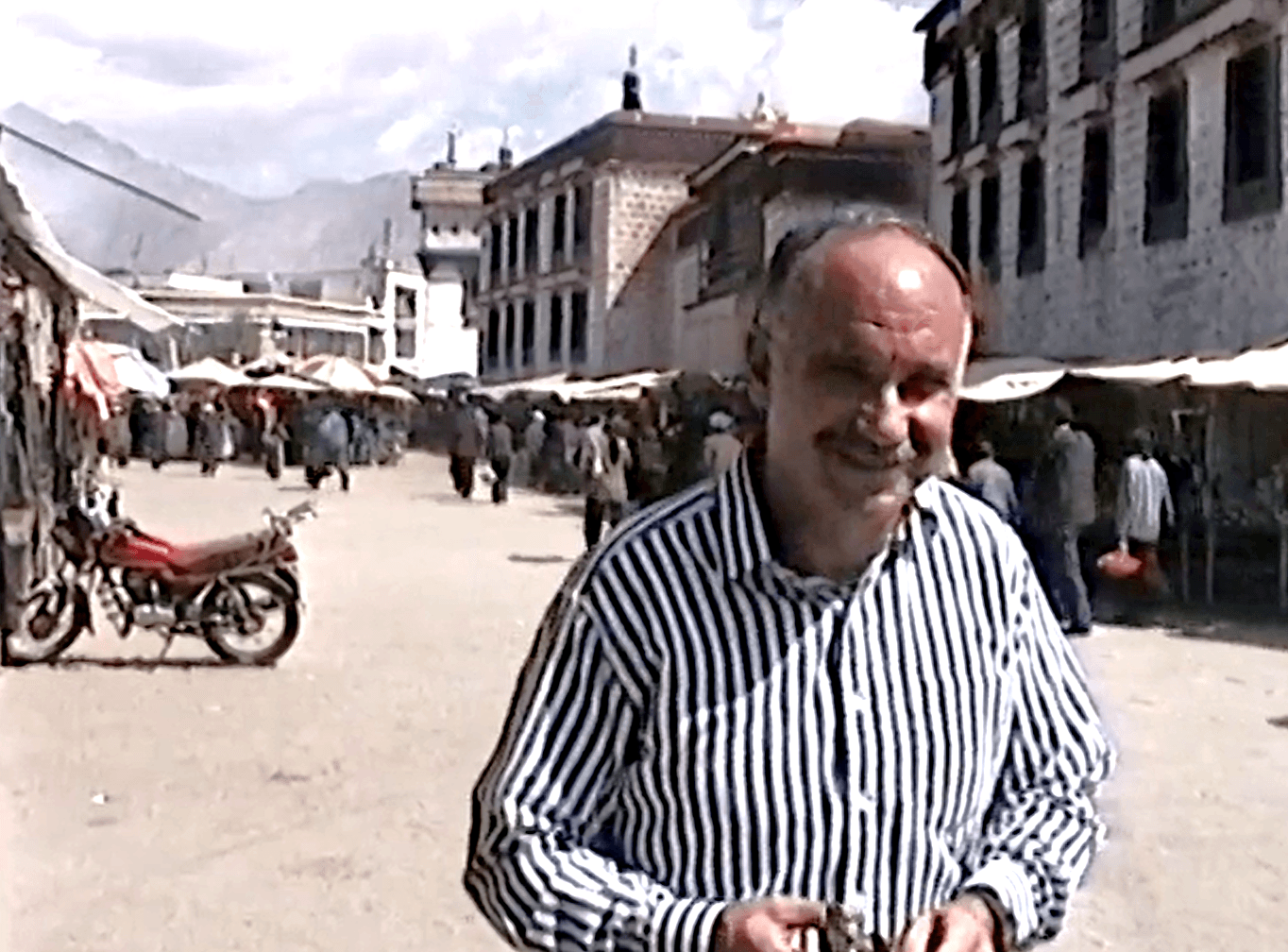
Reese Erlich (1947-2021) was an investigative journalist and writer based in California. He gave his collection to Stanford Special Collections near the end of his life, and we are proud to announce the availability of many audio recordings Erlich created in the course of his work, especially for radio broadcast.
Erlich graduated from UC Berkeley in 1970, majoring in Political and Social Change. As a Junior, he and six others were arrested and indicted as the “Oakland Seven” for organizing a Stop the Draft week. They were defended by civil rights attorney Charles Garry and later acquitted of all charges. Beginning as a staff writer and research editor for Ramparts magazine, he spent most of the next forty years as a freelance print and broadcast reporter. He worked regularly for National Public Radio, Public Radio International, Christian Science Monitor, ABC (Australia), and Radio Deutsche Welle; his articles appeared in San Francisco Magazine, Mother Jones, The Nation, Vice News and Foreign Policy; and his television documentaries aired on PBS stations around the country. Erlich authored or co-authored a number of books, mostly about Syria, Cuba and Iran. In addition to his other work, Erlich taught journalism classes in local colleges.
As a print and broadcast journalist, Erlich did not shy away from difficult topics, and his digitized recordings consist mostly of conversations that he used to develop his stories. Collectively, they show his curiosity and interest in both nearby and far-flung places, capturing people and places from the 1980s to the early 2000s and revealing to the listener question-by-question the impact of local/domestic or foreign policies on ordinary lives. Erlich demonstrates old-school journalism and reporting, often going out into the streets to speak with local citizens after meeting with politicians and policymakers. He visits farms, schools, orphanages, hospitals, factories, temples, and museums, and speaks to passers-by in markets and open squares, during concerts and labor rallies, and also in their homes. You can hear the rattling of the trucks or humming of airplanes that he journeys on. It is also hard to miss the emotions in the voices of those Erlich speaks with as they discuss war, poverty, effects of radiation, belief systems or their ways of life.
After reviewing over 300 recordings in this first phase of released works, we see how meticulous Reese Erlich was in his information-gathering. Before each conversation, he often began with technical sound checks, then moved on to identifying names, places or other personal details his interviewees were willing to share before probing the issues at hand deeper and deeper with each question. Erlich also recorded ambient or background sounds to add color, texture and context to his stories, and made extensive handwritten notations on many of his tape labels, wanting to get those details right for later.
As Erlich relates in a UC Berkeley Osher Lifelong Learning Institute article, “Sound drives radio: Ambient noise gives the listener a sense of place. Sound bytes drive the story so you basically try to get good bytes and then write around them ... a radio story has to be brief and succinct, and since people can’t go back and reread, the reporter has to be clear who’s speaking and why what they’re saying is important.”
Among some of the more recognized individuals that Erlich interviewed or recorded include: journalist Walter Cronkite; former president of Iran Akbar Hashemi Rafsanjani; former Portuguese president Mario Soares; actor Carroll O'Connor; and musician John Lee Hooker. Other recordings digitized by the Stanford Media Preservation Lab involve issues in South Africa, China’s rising economy, the Black Panthers, workers rights in Silicon Valley and San Francisco, and peace in the Middle East.
These recordings are available online to the Stanford community and to visitors in the Field Reading Room at Green Library. All currently available recordings can be browsed in SearchWorks, and represent just a fraction of Reese Erlich’s archives as description is ongoing. For a fuller description of what has been deposited at Special Collections, consult his finding aid.
Stanford's Archive of Recorded Sound also has a related Erlich collection mostly from his "Jazz Perspectives" program: the Reese Erlich Jazz Programs and Interviews Collection (ARS0195).