Meet the K-Pop Data Hunters
The Stanford community and the XTRM dance team unite to celebrate K-Pop at the East Asia Library during Love Data Week.
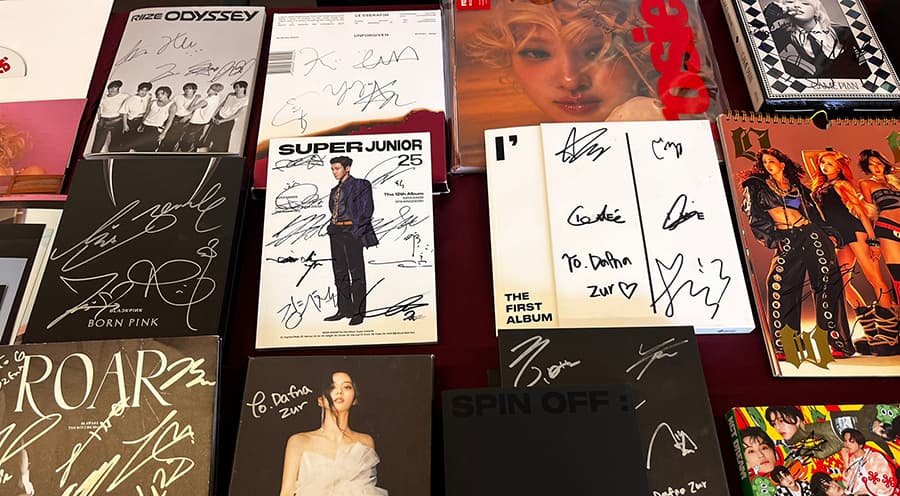
The East Asia Library recently hosted a data extravaganza designed for both die-hard K-Pop fans and those intrigued by this global phenomenon, all in anticipation of the three sold-out concerts at Stanford Stadium in May, featuring the world-renowned band BTS. The event was a highlight of a weeklong series of workshops and activities sponsored by Stanford University Libraries, coinciding with its fourth annual Love Data Week and the eleventh observance of International Love Data Week
Guests explored curated resources from Stanford's expansive K-Pop collection, which comprises over 150 Korean titles, including CDs and posters, as well as sheet music, stamp collections, and photo books. Attendees also gained insights into how data is collected, analyzed, and shared, ultimately fostering a richer understanding of the K-Pop universe, from song metrics to fan engagement. Afterwards, they competed for prizes in games, enjoyed a selection of Korean snacks, and shared some of their favorite songs, including "Girls Never Die" by the Triples, "Rewind" by the Wonder Girls, and "Case 143" by the Stray Kids.

Organized by librarians Jee-Young Park and Jooyeon Hahm, and the Libraries’ social media coordinator, Carrie Gao—who humorously described their displays as "enough K-Pop data to seal the Honmoon," a reference to a magical barrier in the animated 2025 film KPop Demon Hunters—the program aimed to shed light on how data is shaping some of the hottest trends in the music industry while uncovering the compelling stories behind the music.
“Remarkable conservations arise when the Stanford community comes together, whether to learn something new, sharpen a skill, or discuss a shared love of K-Pop,” said Gao, a member of the Love Data Week planning committee, who connected with students before, during, and after the K-Pop Data Hunters event.
The main attraction was a dynamic dance performance by XTRM, Stanford’s non-audition, competitive K-Pop dance team, which has been captivating audiences since its inception in 2013. “About forty students participate in our workshops and dance showcases each quarter,” noted graduating senior Aliya Alsafa. “Some students come with a specific interest in K-Pop, while others are dancers learning new moves. Personally, I have been a fan since middle school.”

Fellow XTRM dancer Alice Zhou and undergraduate Meria Pha expressed their enthusiasm for the diverse range of K-Pop-related resources available at the East Asia Library, including titles that focus on business aspects. “I had the privilege of traveling overseas to study Korean media, music, and culture as part of a Stanford Global Seminar titled Gangnam Style: South Korea's Soft Power Empire,” Zhou shared. The Global Seminars are faculty-led programs offered through the Bing Overseas Study Program.
The immersive trip was led by Dafna Zur, Associate Professor in the Department of East Asian Languages and Cultures. This summer, she is set to guide another group to Seoul. In addition to leading these excursions, Zur offers courses on Korean literature, cinema, and popular culture; teaches an introductory seminar on K-Pop for frosh and sophomores; and advises students on writing theses and dissertations on modern Korean culture.
“When I first arrived at Stanford 14 years ago, an interviewer at The New York Times asked me whether K-Pop could last,” Zur recalled. “Today, K-Pop exudes energy, and its fans are deeply loyal and knowledgeable. The genre has opened new avenues for studying Korea on a global scale. For example, the exploration of Korean pop culture has expanded significantly, fueling sustained interest in Korea and increasing enthusiasm for learning the Korean language. Now that K-Pop has a rich history, it also presents an intriguing subject for applying large data projects.”
Shauna Stewart, a graduate student in East Asian Languages and Cultures, has studied both K-Pop and K-hip-hop. “Both are bilingual and growing in popularity in the U.S., providing ample opportunities for fun and engaging research,” she remarked. “I am particularly interested in K-Pop's female idols and their depictions of gender and sexuality, and I am looking forward to experiencing the festival atmosphere outside Stanford Stadium before the BTS concerts.”
Korean Studies Librarian Jee-Young Park envisioned the K-Pop collection and gathered the materials for display at the event. “Stanford has one of the largest and most active Korean Studies programs in North America,” she noted, “At the East Asia Library, we receive numerous questions from students about various aspects of K-Pop, including its history, related statistics, artwork on album covers, and broader concerns such as the environmental impact of the rapid consumption of K-Pop albums.”

Jooyeon Hahm, Head of Data Science Training & Consultation, contributed data sets from Korean newspapers and helped build a comprehensive database of song lyrics. Both Park and Hahm were born in Korea and enjoy sharing stories about their homeland and their favorite K-Pop bands. Hahm added, “Our goal is to inspire students to view the library as a resource not just for academic projects, but for other genuinely interesting pursuits, such as exploring accurate and well-curated data on topics about which they are passionate.