Records of Stanford student’s incarceration during WWII digitized by Stanford University Libraries
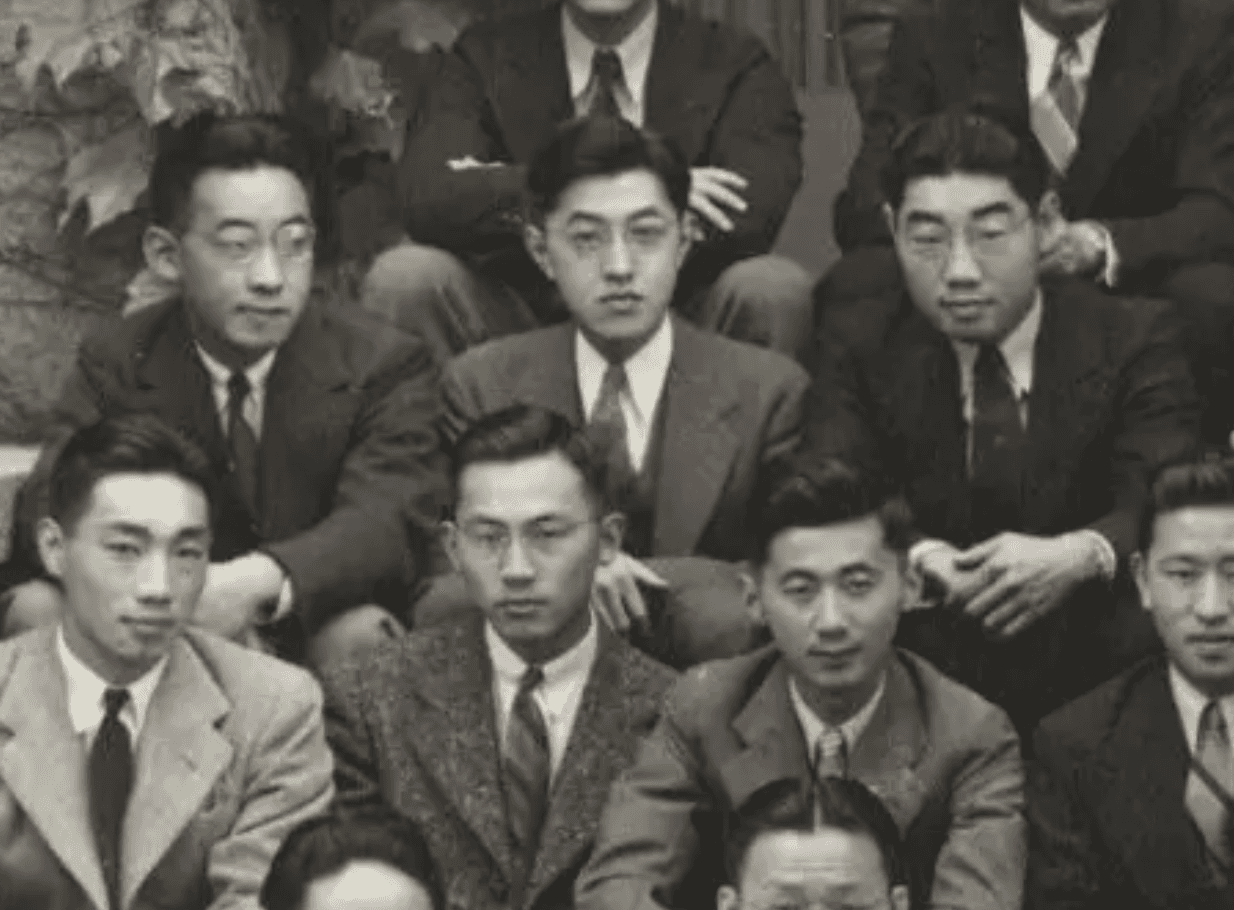
The Kazuyuki Takahashi papers, comprising digital scans of correspondence, photographs, and related materials created and collected by Stanford University graduate Kazuyuki “Kaz” Takahashi and his wife Soyo Takahashi during their incarceration at Santa Anita Assembly Center and Manzanar concentration camp, includes correspondence with family in Japan and with Stanford University administration and faculty, as well as a family scrapbook documenting Kaz and Soyo's experiences while incarcerated. The materials, lent to Stanford University Libraries by Caroline Takahashi, Kaz and Soyo's daughter, were recently digitized by the Digital Production Group, and cataloged and described by staff of the Department of Special Collections & University Archives.
“The papers of Kaz Takahashi are an extraordinary collection that reveal personal, social, and institutional realities of a terrible period in American history,” shares Dr. Gordon Chang, Professor of History and Co-founder and Inaugural Director of the Asian American Research Center at Stanford. “Dr. Takahashi was brave and upright and his voice resonates with us today. He continues to speak to us about injustice and the strength of the human spirit.”
Born in 1918 in Tokyo, Japan, Kaz Takahashi spent much of his early youth traveling with his father who was employed with a steamship company. The family spent several years in Manchuria and England before settling in New York City in 1931, where Kaz completed junior high school and high school.
Kaz enrolled at Stanford in 1936, and received his B.S. in Biology from Stanford in 1940. An elected member of Phi Beta Kappa and Sigma Xi who also served as vice president of the Japanese Student Association, Kaz was one of just 42 seniors that year who graduated with ‘great distinction.’

Kaz was enrolled as a Ph.D. student in Stanford’s Department of Biological Sciences on February 19, 1942, when Executive Order 9066 was signed by President Franklin D. Roosevelt, authorizing what was to become the mass forced removal and incarceration of all Japanese Americans on the West Coast. Kaz and his wife, Soyo, who was born in Palo Alto, were uprooted to the Santa Anita Processing Center, and then to the Manzanar concentration camp in September 1942.
“Our family is deeply grateful to Stanford Libraries for preserving this collection, which offers a window into our father’s experiences and perspectives during World War II,” shares Caroline Takahashi. “Like others who were incarcerated, he rarely spoke of those years while we were growing up. It was only through the discovery of these personal papers and memorabilia that we truly came to understand his daily life during incarceration and his enduring gratitude for the many members of the Stanford community who provided him with friendship and support. We are moved to see this collection come full circle back to Stanford, where we hope it will serve as a lasting resource for understanding this chapter of history.”

Kaz and Soyo were interviewed for a National Geographic article in April 1982 titled “Japanese Americans: Home at Last,” where they described the circumstances of getting married just prior to incarceration: “Like a lot of couples then, we got married just before the evacuation so we wouldn't be separated,” remembered Dr. Kazuyuki Takahashi. Soyo added, “We honeymooned at Santa Anita assembly center.”
The Santa Anita Assembly Center was a horse racing track near Pasadena converted into temporary housing for incarcerated Japanese Americans pending the construction of more permanent concentration camps. The National Geographic article describes how at Manazar the Takahashis shared a “single, manure-speckled horse stall… with another newlywed couple... Kaz tacked up wrapping paper to block the manure dust. Soyo hung a Stanford pennant.”

Kaz and Soyo were relocated to Manzanar in September 1942; in January 1943, Kaz helped to organize an accredited Manzanar Junior College, and he was appointed to teach human physiology. From March to June 1943, he also served as Registrar of the Junior College, and then as Director of Adult Education, while Soyo served as a secretary and taught typing as a member of the Adult Education faculty.
Kaz’s participation as a member of Guayule Laboratory at Manzanar under Kenzie Nozaki (Stanford Ph.D. 1940) to help develop a natural rubber substitute using the guayule shrub to aid in the war effort is also represented in the correspondence, including Kaz’s role in helping to secure equipment from a former mentor at Stanford, Professor Hadley Kirkman in the Department of Anatomy, to support the project.
“As reflected in these papers,” Caroline Takahashi shares, “my father’s circle of support included Dr. Kirkman, his dear friend and mentor; Dr. George Ulett, his undergraduate classmate and lifelong friend; and Miss Alice Hays (Stanford AB 1896, and Stanford Reference Librarian), for whom our father worked for room and board. These individuals, among others, provided a lifeline to his life at Stanford—even helping to store his medical school lab equipment when he was forced to leave.”
Over 120,000 immigrants and citizens of Japanese origin were forcibly removed and placed into camps by the United States government during WWII. Persons of Japanese ancestry could not return to the exclusionary zone on the West Coast until after the end of the war; additionally, like many who were incarcerated, Kaz found it difficult to find a professional position that reflected his background experience, and needed approval from the US Attorney to travel for professional opportunities. The collection includes correspondence with colleagues at universities at which Kaz sought employment while he was incarcerated at Manzanar, as well as travel requests from St. Louis, MO, where he and Soyo moved after his incarceration for work and study at Washington University.
Immediately after the war, Kaz became a co-founder and co-editor (with Henry Tani ‘38) of the Stanford Nisei Alumni Newsletter. The first issue was printed and distributed on December 1, 1944 from Kaz and Soyo’s home in Saint Louis, MO.

In 1945, Kaz returned to Stanford to complete his medical school training. He was a member of the Alpha Zeta chapter of Phi Rho Sigma, and graduated in 1949. For over 25 years, Kaz practiced medicine in the San Francisco Bay Area, including as a Doctor of Internal Medicine, Endocrinology, at Oakland's Kaiser Hospital. He died in 1999.

In 1993, over 30 Stanford students who had been incarcerated during WWII were recognized at a reunion at Stanford organized by the Stanford Asian American community, including Professor Gordon Chang, Stanford students, and staff of the Asian American Activities Center. Dr. Kazuyuki “Kaz” Takahashi was one of nine surviving alumni who attended the reunion in person and was formally honored at a ceremony officiated by President Gerhard Casper.

Casper told the nine returning alumni that “by your presence you are sharing a history and experience in a deeper manner than a mere history book can convey. The values of a university are not, and can never be, in accord with the views that underlie the actions of the government in your case.” He concluded his remarks, “So many human beings, this very moment, having done nothing, nevertheless find themselves caught in the wrong place at the wrong time. Let us do our best to make sure that this happens less often. In any event, today, you are in the right place. We thank you for your presence here.”