Releasing the Records of Dachau and Mauthausen Concentration Camps
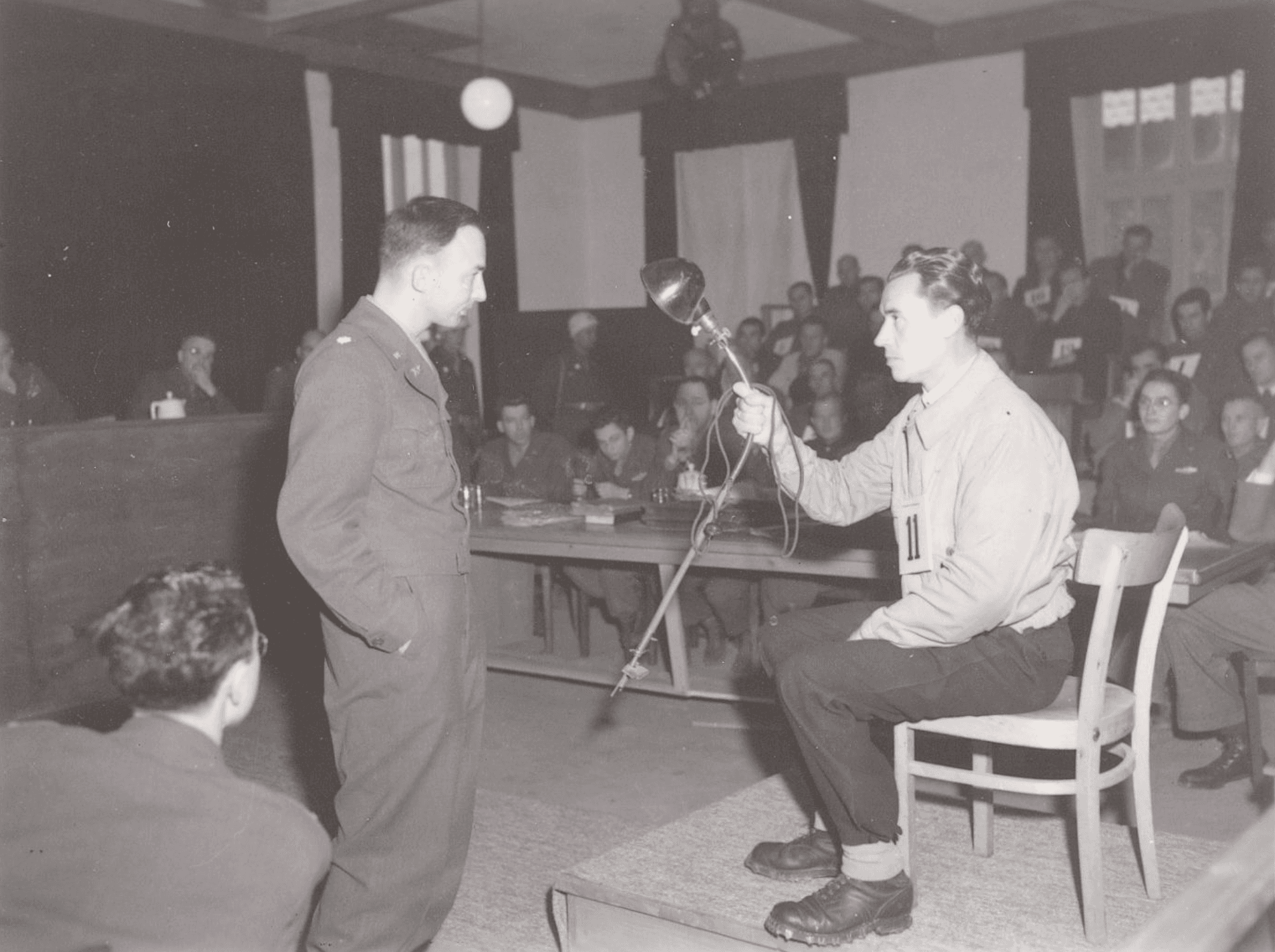
Stanford University’s Virtual Tribunals initiative, in partnership with the National Archives and Records and Administration (NARA), is proud to release the digitized trial records for Dachau and Mauthausen concentration camps. After World War II, the United States Army arrested many of the perpetrators of the Holocaust and took them to the former concentration camp of Dachau, where they stood trial for war crimes. The Army began its prosecutions with the staff of Dachau itself, the oldest of the concentration camps, moving on to the defendants from Mauthausen six months later. The records of the trials were classified until the late 1970s, when a portion of them were microfilmed. In 2023, the Center for Human Rights and International Justice and Stanford University Libraries successfully digitized those microfilms, revealing the records of many of the post-war war crimes trials in Europe. Most original records were not microfilmed, however, remaining on paper. Partnering with NARA allowed Virtual Tribunals access to those paper records, which were subsequently digitized into incredibly detailed and fully text searchable images. The expeditious digitization process was made possible by NARA’s new state-of-the-art digitization facility in College Park, Maryland. Equipped with high-speed scanners and overhead camera systems that can handle diverse formats and record types, the new facility will be able to digitize up to 10 times as many records per year compared to previous technologies, including historically important trial records like those of the Dachau Trials. Complete with narrative histories and guides written by Michael Eastman and student researcher Lindsey McKhann, these new records impressively complement the Virtual Tribunals online archive.
Opening the Memories of Dachau
In April 1945, American soldiers marched out of the forests of southern Germany and into the compound of Dachau concentration camp, roughly 10 miles from Munich. Freeing the prisoners and arresting the guards, the United States Army would go on to create military courts on the grounds of Dachau in the months to come. They would prosecute the direct perpetrators of the Holocaust, judging criminals in the very rooms in which their crimes had been committed.
After World War II, the United States and the Allies created a globe-spanning series of programs to capture, try, and sentence war criminals. In Europe, the most well-known of these courts was the International Military Tribunal at Nuremberg, in which the surviving senior leadership of Nazi Germany were tried for initiating and waging war. The United States followed that up with the Subsequent Nuremberg Trials, to try the industrialists, politicians, and professionals who enabled Nazism. Finally, the United States Army created the Dachau Trials to prosecute those who had direct responsibility for committing Nazi Germany’s international crimes. The Army initiated the program to indict those who had murdered American prisoners of war, but it soon transformed into a much larger endeavor, one that sought to try those who had run the concentration camps liberated by the United States Army and their allies: Dachau, Buchenwald, Flossenbürg, Mauthausen, Muehldorf, and Nordhausen, as well as dozens of their satellite camps.
Opening in 1933, Dachau was the first concentration camp created by Nazi Germany. Those deemed “enemies of the Reich” would be hauled there, walking in through a gate that proclaimed “Arbeit macht frei” – “Work shall set you free.” It was a lie. In the 12 years that it operated, 200,000 people from 30 nations would be sent there. More than 30,000 would die by beatings, overwork, disease, and malnutrition. One-third of the prisoners were Jewish, detained for no other reason than their beliefs or heritage; the other two-thirds were political prisoners, held for disagreeing with Hitler’s vision for Germany. When forward units of the U.S. Seventh Army rammed their tanks through the front gate and liberated the camp and its prisoners on April 29, 1945, a typhus epidemic was tearing through those still alive. Working hard to care for the survivors, the Army soon found a new purpose for Dachau. Close to Munich and its roads and railways, and laid out with military orderliness, Dachau was both logistically and symbolically an appropriate place to try war criminals.

In time, the Army would bring most war criminals to Dachau to be tried regardless of where their crimes had been committed. Yet, the Army chose to begin with the criminals of Dachau itself, selecting and prosecuting 40 of the camp staff. Men like Claus Schilling, a doctor who experimented on prisoners by infecting them with malaria; Friedrich Ruppert, an SS soldier who executed captured British women special forces spies; and Otto Moll, an SS officer who personally murdered hundreds of thousands of people at Auschwitz before transferring to Dachau and overseeing death marches of prisoners; would sit in the dock. Opposing them was a 32 year old American attorney from Alabama, William Denson. The laws of war had no mechanism to comprehend the Holocaust, a problem Denson ingeniously solved by batching together long-standing fundamental principles of criminal law. Using the documents created by the Nazis themselves and securing the testimony of surviving prisoners, Denson would prove beyond reasonable doubt that all 40 defendants were guilty of the crimes charged. Denson would later prosecute defendants from Buchenwald, Flossenbürg, Mauthausen, and elsewhere, all in the same courtrooms at Dachau, securing 174 convictions of 177 defendants. By their end, more than 1600 people would be prosecuted by the U.S. Army at Dachau.

At the time of their holding, the Dachau Trials were open to the public and the press and were well publicized. Together with the other military trials in Germany, they became one of the world’s great history seminars, revealing the crimes of Nazi Germany in extraordinary and irrefutable detail. Providing a reason for the fighting of the war, they also went on to undergird many legal instruments that have come to define the modern world: the Charter of the United Nations in 1945, the Universal Declaration of Human Rights in 1948, and the Geneva Conventions of 1949. Paradoxically, however, on their closing, the records of the Dachau Trials were classified. Released in tranches from 1975 onwards by the Department of Defense to NARA, their size and complexity has made them largely impregnable to researchers. Striving to prevent them from being forgotten from the annals of history, the Virtual Tribunal initiative aims to preserve the legacy of the Dachau Trials, which are perhaps the world’s clearest window into the Holocaust.


About Virtual Tribunals
In 2018, Stanford University Libraries and the Stanford Center for Human Rights and International Justice debuted the Virtual Tribunals initiative, which seeks to discover, digitize, and display all international criminal justice records and make them available for free, forever. In 2023, together with the International Court of Justice, Virtual Tribunals released the entirety of the records of the International Military Tribunal at Nuremberg. For the first time, the records of the world’s most famous trial were available to all. Also in 2023, Virtual Tribunals released a small but significant portion of the records of the Dachau Trials, including the records for the Flossenbürg, Muehldorf, and Nordhausen camps.
In 2025, Virtual Tribunals embarked on a long-term project together with NARA to digitize the entirety of the Dachau Trials. This project begins with the digitization of the trial for Dachau concentration camp itself, as well as for Mauthausen concentration camp, which produced the largest concentration camp trial. As each batch of records is completed, they will join the many other records available from the Virtual Tribunals collection, which are hosted on Stanford Libraries’ Spotlight website. In addition to the European World War II records, these collections include records from the Asia-Pacific theater of World War II, as well as modern day records from international criminal tribunals in East Timor and Lebanon. Virtual Tribunals gives practicing lawyers the ability to connect courts across time and space, while simultaneously allowing historians and their students to study these events to improve our understanding of the development of human rights.
Michael Eastman is a South African human rights lawyer and a historian at Stanford University Libraries and the Stanford Center for Human Rights and International Justice
Lindsey McKhann is a former student researcher at the Stanford Center for Human Rights and International Justice. She holds an M.A. in Public Policy, B.A. in International Relations, and Minor in Human Rights from Stanford.