The Allen Ginsberg centenary exhibition
Highlights from Ginsberg's archives at Stanford University Libraries reveal biographical insights that have contributed to his reputation as a literary icon of the Beat Generation.
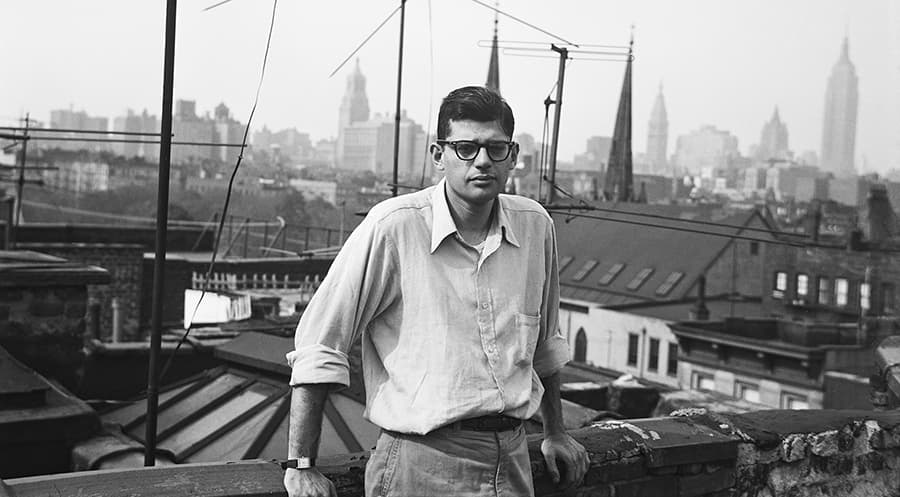
In celebration of the centenary of Allen Ginsberg’s birth on June 3, 1926, Stanford University Libraries will present its inaugural exhibition featuring his personally assembled archives. This exhibit delves into Ginsberg’s multifaceted legacy as a poet, activist, promoter, traveler, spiritual seeker, and teacher. “The Allen Ginsberg Papers, a transformative acquisition for our Special Collections in 1995, hold immense importance for the San Francisco Bay Area and serve as a destination collection for researchers seeking primary sources in the humanities,” said Michael A. Keller, the Ida M. Green University Librarian.
“Thanks to Ginsberg's uncanny premonition to save almost everything (including the trimmings he clipped from his beard!), the archive is the central database for the twentieth-century American underground and beyond,” said J. Christian Greer, a lecturer at Stanford. “Students on our many class trips to inspect its most treasured items, such as Ginsberg’s marginal scribblings on the earliest drafts of Howl, have often mentioned that it is easy to get lost in the aura of such objects.”
The lesser-known materials from Ginsberg’s boyhood to his emergence as a Beat poet illuminate his destined path as a writer. At the age of eleven, he expressed this ambition in his first diary: “I’ll be a genius of some kind or other, probably in literature. I really believe it.” The collection includes a wealth of high school publications, assignments from Columbia University faculty mentors like poet Mark Van Doren and literary critic Lionel Trilling, and paid pieces from his odd jobs after graduation. Notebooks and correspondence document Ginsberg's budding friendships with future Beat authors William S. Burroughs, Jack Kerouac, and Neal Cassady, as well as poet William Carlos Williams. These materials reveal the youthful Ginsberg as a prolific and passionate author who promoted the writings of others to mainstream and underground publishers while facing rejection himself. They also record his first mystical experiences and contain themes that would later emerge in his poems.

The defining moment for Ginsberg as a poet came with his public reading of “Howl for Carl Solomon” at the Six Gallery in San Francisco and the subsequent publication of Howl and Other Poems by City Lights Books in 1956. After a notorious obscenity trial in San Francisco, Ginsberg fully embraced his identity as a free speech advocate and deftly navigated his newfound media celebrity. As an openly gay man a decade before Stonewall and a vocal proponent of drug experimentation, he became a leading voice for rebellion against the conformity of the postwar Eisenhower era. The stages of his creative process for “Howl for Carl Solomon” and “Kaddish for Naomi Ginsberg” can be traced through various materials, including creative writing notebooks, handwritten drafts, original typescripts, flyers and posters, and first editions of these works.

Rebecca Wingfield, Curator of American and British Literature and the exhibit's curator, stated: “While interest in Ginsberg may fluctuate with the political and cultural currents of the times, his academic relevance remains robust. Stanford faculty have utilized his archives to explore with students a range of topics, including the origins of alternative media from fanzines to memes, cinematic adaptations of literature, queer sculpture, psychedelic culture, spiritual rebellion, and hip consumerism.”
The exhibit concludes by chronicling Ginsberg’s later years through an assortment of evocative documents, including his homoerotic love poetry, the anti-war poem "Going to Chicago," written on the plane to the 1968 Democratic National Convention, and a list of psychedelic drugs he wished to explore along with their effects. It also features journals detailing his worldwide travels, including his extensive journey to India to study Eastern philosophy and religion, as well as a rough draft of his poetic credo intended as a preface to his Collected Poems 1947–1980.

“Some of the most memorable experiences I have had, and I suspect it is the same for other researchers, emerged from spelunking into the unknown depths of this archive,” said Greer. He explained: “Successive generations of Beatniks, hippies, and punks, not to mention gay liberationists, Buddhist monks, and conspiracy theorists, channeled their creative output directly to Ginsberg, who they intuited as perhaps the only person who could understand their visions. The result is that the Ginsberg archive is a venerable Bibliotheca for mimeographed manifestos, rare samizdat pamphlets, self-published novels, art fotos, and flyers, ranging from the sublime to the absurd. I like to joke that the Ginsberg archive is not so much a collection of papers, but a repository of magical items.”

Ginsberg at 100: Selections from the Allen Ginsberg Papers at Stanford will be on view in the Peterson Gallery and Munger Rotunda of the Cecil H. Green Library from June 5 to September 5, 2026. “Ginsberg’s archives contain visually striking, historically meaningful, and culturally recognizable artifacts. The curated selection on display is accompanied by historic audio recordings,” said exhibit producer and designer Deardra Fuzzell. The exhibition is open to everyone, with entrance to Green Library requiring a Stanford ID or registration with a valid government ID.