Beyond biography: engaging with artists' archives at Stanford
The Archive Rooms collaboration between the Cantor and the Libraries is expanded and enriched through newly installed exhibitions.
The Archive Rooms at the Cantor Arts Center are currently featuring their third pairing of installations, presenting intimate single-gallery exhibitions that draw from the Special Collections at Stanford University Libraries. These exhibitions seek to shed light on the creative processes of notable San Francisco Bay Area artists by showcasing their correspondence, notebooks, photographs, mementos, and ephemera. These personal artifacts, placed alongside the final pieces, establish a deeper connection between the artists and their creations.
Launched in 2024 by the Cantor’s curators in partnership with the Libraries’ archivists and subject specialists, this series transcends mere biography. The Archive Rooms invite viewers to engage with the artists' daily practices, the inspirations and challenges that shaped their work, and their mentors and mentees, as well as their broader influences. This exploration reveals the flow of creativity across various aspects of their lives, fostering a richer appreciation for the complexities of artistic expression.
“The archival exhibitions provide rare opportunities to emphasize the multifaceted lives of these artists, going well beyond the thematics of their well-known and frequently displayed artworks,” said Ivy K. Vuong, a PhD candidate in the Department of Art & Art History who curated Archive Room: Irene Poon and Charles Wong.

Over several decades, the friendship of Poon (b. 1941) and Wong (1922-2024) evolved from peers to studio collaborators, ultimately becoming life partners. Wong trained under Minor White and Ansel Adams at the California School of Fine Arts and gained acclaim for his photographs documenting San Francisco’s Chinatown during the 1940s and '50s. At the suggestion of photographer Imogen Cunningham, Poon and Wong collaborated on the landmark publication Leading the Way: Asian American Artists of the Older Generation (1991).
Vuong selected for the exhibit their lesser-known experimental photographs that capture reflections, windows, and quiet interiors, including a group of prints that develop the metaphor of love as a mirror. “Above all, they share a conviction that the camera is an instrument for encountering and understanding the people and places around them,” she stated.

The two photographers’ literary activity and community involvement are evident in their prose and poetry, where they reflect on their own artworks as well as those of others. After graduating from San Francisco State University, Poon remained on campus as the slide librarian, transforming the library into a vibrant gathering space. Through her exhibitions, publications, and service on the board of the Chinese Historical Society, she brought recognition to Bay Area artists such as Ruth Asawa, and played a critical role in shaping Asian American art history.
“For Wong, the interplay between the literal and the luminous was present at the beginning; his most abstracted images were woven with an accompanying writing practice that moved between the communal and the interior,” noted Vuong, highlighting a shared vocabulary and purpose between the two artists.
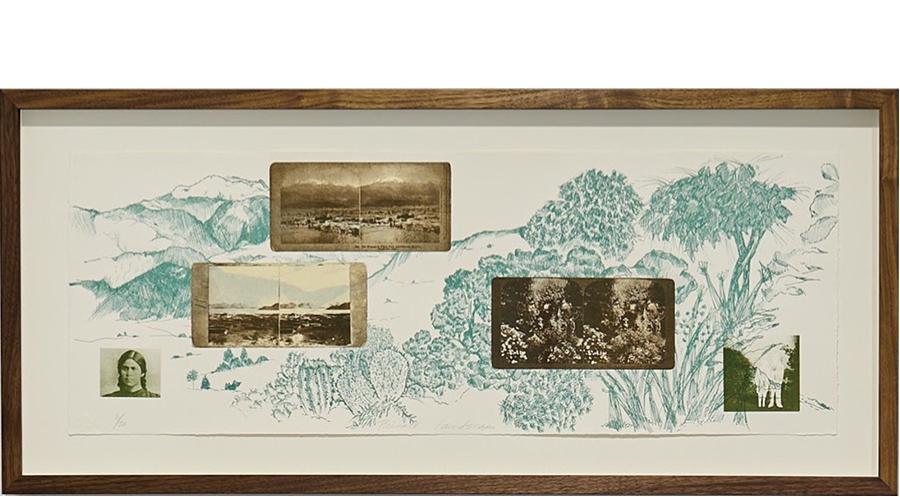
Archive Room: Amalia Mesa-Bains is curated by Jorge Eduardo Sibaja, a former curatorial assistant at the Cantor. Mesa-Bains (b. 1943), an artist, curator, and educator, has studied and drawn from the traditions of Mexican domestic altars and other collective memories that have shaped Chicano and Latino art history over the past half-century. She has played a vital role in defining its intellectual and aesthetic foundations. “Her large-scale installations, like Curandera’s Botanica or her Venus Envy series, lean on the already widely understood languages of sacred and private spaces to place viewers into a state of contemplation and measured care,” said Sibaja.

By activating the archive in the exhibition, Sibaja reinforces the powerful messages in her artworks, much like Mesa-Bains understood art as an agent of political change by placing private objects in public settings. Recent print works and objects spanning multiple decades of her oeuvre are presented alongside hand-drawn installation studies, journal entries, photographs of the artist at work, and personal correspondence, including a heartfelt love letter to her husband.
The synergies between archives and artworks are being further explored at Stanford in venues beyond the Archive Rooms. Patty Chang: Surfacing, an ongoing exhibition at the Anderson Collection and the first solo artist commission by Stanford's Asian American Art Initiative, includes archival and archaeological materials that document life at the Point Alones Chinese Fishing Village, now the site of Stanford’s Hopkins Marine Station. The Cantor's newly opened California Current: Art and Histories from the Bay Area brings together works by Pacita Abad, Bernice Bing, Lynn Hershman Leeson, and Amalia Mesa-Bains, following their presentations in the Archive Rooms, as well as those of many other Bay Area artists.

An extensive assortment of artists' archives will be on display next year at the Cecil H. Green Library in conjunction with the Further Triennial, a region-wide series of exhibitions and programs across Northern California set to open in March 2027. Please direct inquiries about the archives to the Department of Special Collections.
Related Articles
- Exhibition spotlights civic engagement of artists (September 2025)
- ‘Archive Rooms’ at the Cantor is a window into artists’ work (October 2024)