Stanford University Libraries Data Sharing Prizes for 2026
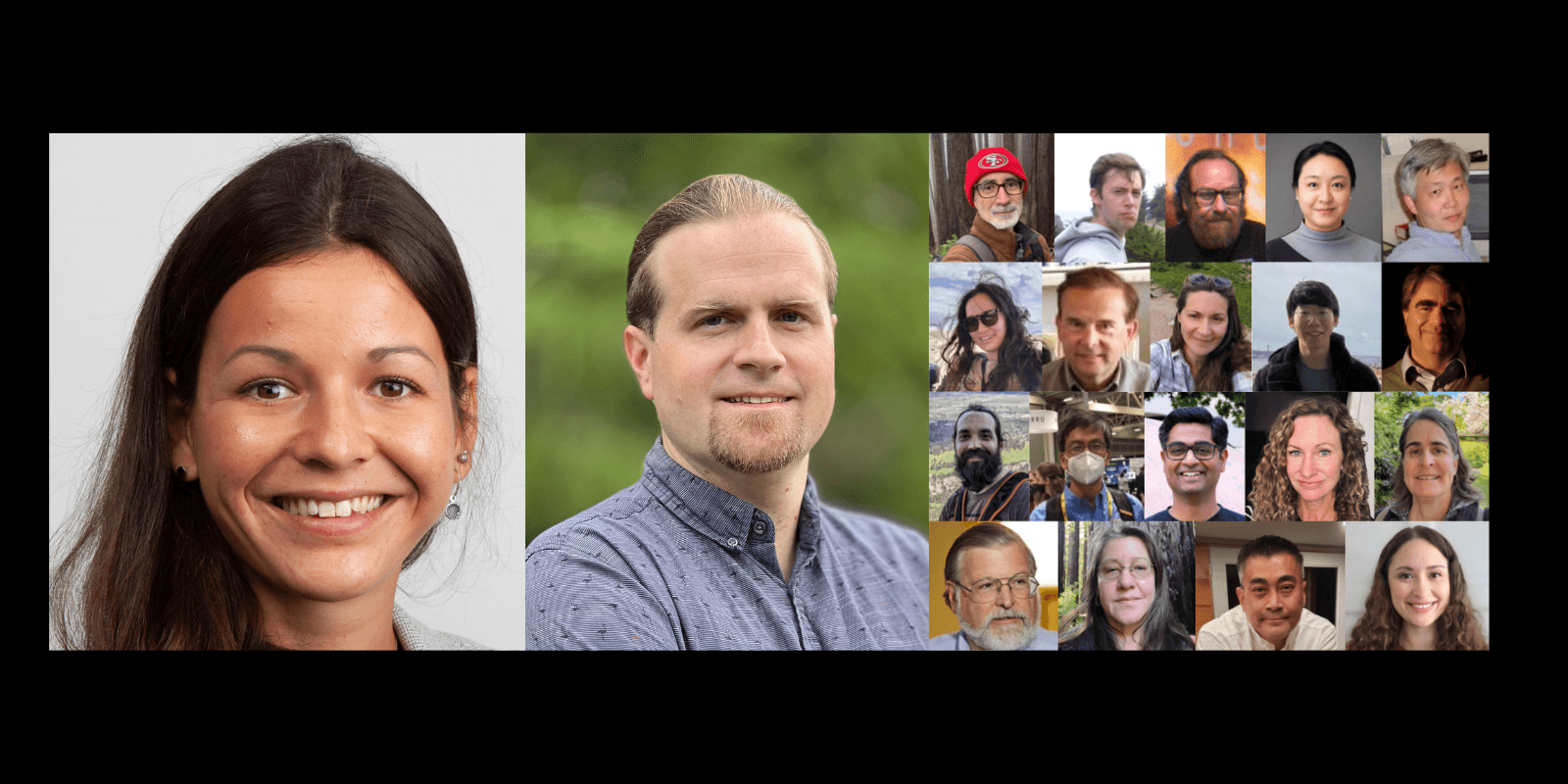
We are pleased to announce the winners of the Stanford University Libraries Data Sharing Prizes for 2026. The winners were honored at the CORES Annual Symposium 2026: AI and Scientific Reproducibility on Wednesday, April 29, 2026.
The Data Sharing Prizes recognize outstanding examples of impactful data sharing and celebrate researchers who:
- make their data available via an appropriate online repository,
- exemplify disciplinary best practices for making their data FAIR (findable, accessible, interoperable, reusable), and/or
- advance others’ research by sharing their own data.
The Libraries are proud to offer these awards in support of CORES, the Stanford Center for Open and REproducible Science. Nominations are made each spring and awards are announced in conjunction with the CORES Annual Symposium. Awardees receive a cash prize and awards are added to their ORCID records.
This year we are pleased to announce three winners that illustrate the breadth of roles involved in data sharing, including an early career researcher, academic staff, and a research group.
2026 Awards
Sheena Conforti
Postdoctoral Scholar
Department of Civil & Environmental Engineering and Division of Infectious Diseases and Geographic Medicine
Sheena's ORCID iD (Open Researcher and Contributor ID)

Sheena Conforti, a postdoctoral scholar in Civil & Environmental Engineering, has generated and shared one of the largest environmental surveillance datasets for a respiratory virus to date, comprising 43,876 wastewater samples from 147 treatment plants across 40 U.S. states over two years. The data includes harmonized climatic, demographic, and clinical comparison data, and all data and analysis workflows are publicly available in the Stanford Digital Repository (SDR) with a persistent identifier. The repository includes curated datasets, metadata, and complete analytical code in both R and Python.
Sheena noted how her work "demonstrates how rigorous data stewardship and reproducible workflows can transform environmental surveillance data into a durable, community resource." She agrees with the Libraries' position that data and code should be first-class research objects: "By treating data and code as primary research outputs and making them openly available through SDR, this work advances transparency, reuse, and interdisciplinary discovery in pathogen surveillance."
Highlighted Dataset
Radek Chrapkiewicz
Director of Engineering at Schnitzer Lab, Cracking the Neural Code Program
Radek's ORCID iD (Open Researcher and Contributor iD)

Radek led the design, curation, and public deposition of a large-scale neuroscience dataset accompanying a 2025 Cell cover article: "Imaging high-frequency voltage dynamics in multiple neuron classes of behaving mammals." As co-first author, he took primary responsibility for the data-sharing effort, which represents one of the most comprehensive and well-organized public datasets in the field of optical voltage imaging of the brain — a data type that until now has had very limited public availability.
“I designed the dataset architecture with queryable metadata, with FAIR principles at its core and full compatibility with AI coding tools in mind,” explained Radek. “Making this data openly available enables other laboratories to create and benchmark new analysis methods, explore computational models of neural dynamics, and pursue entirely new scientific questions without the cost of replicating complex experiments.”
Highlighted Dataset
This dataset was used in a 2025 publication in Cell, a Cell Press Journal.
Stanford Solar Observatories Group
The Stanford Solar Observatories Group website

The Stanford Solar Observatories Group manages the primary data stream for NASA’s Solar Dynamics Observatory (SDO) and provides the global scientific community with a continuous, high-resolution view of the Sun’s atmosphere and magnetic activity, capturing the Sun's behavior at a 1-second cadence and producing 150 TB of new data per month. The group gives equal attention to access and delivery. Data served by them has been used in thousands of peer-reviewed publications, is actively used for operations and mission planning by various observatories across the world, and helped train the first Heliophysics AI foundation model, Surya.
In their words, the group works to “ensure that critical solar data is democratized and made available to everyone—from professional researchers to citizen scientists—as soon as it is processed” and the award “recognizes a team that doesn't just study the Sun—they ensure the whole world can watch it in real-time.”
The team consists of members Art Amezcua, Charles Baldner, Rick Bogart, Ruizhu Chen, Keh-Cheng Chu, Boyang Ding, Tom Duvall, Shea Hess Webber, Chris Jia, J. Todd Hoeksema, Alex Koufos, Dave Lauben, Yang Liu, Sushant Sushil Mahajan, Haruko Makitani, Aimee Norton, Cristina Rabello Soares, Phil Scherrer, Jeneen Sommers, Thai Hao, Oana Vesa, and Heidi Wong.
Highlighted Resources
- Helioseismic and Magnetic Imager data
- COFFIES (Consequences Of Fields and Flows in the Interior and Exterior of the Sun)
Past Winners
For inquiries about the Stanford University Libraries Data Sharing Prizes, please contact the Stanford University Libraries data sharing team by email sul-data-sharing-prize@lists.stanford.edu.