Stanford’s first Global Seminar in the Baltics focuses on the fragility of freedom
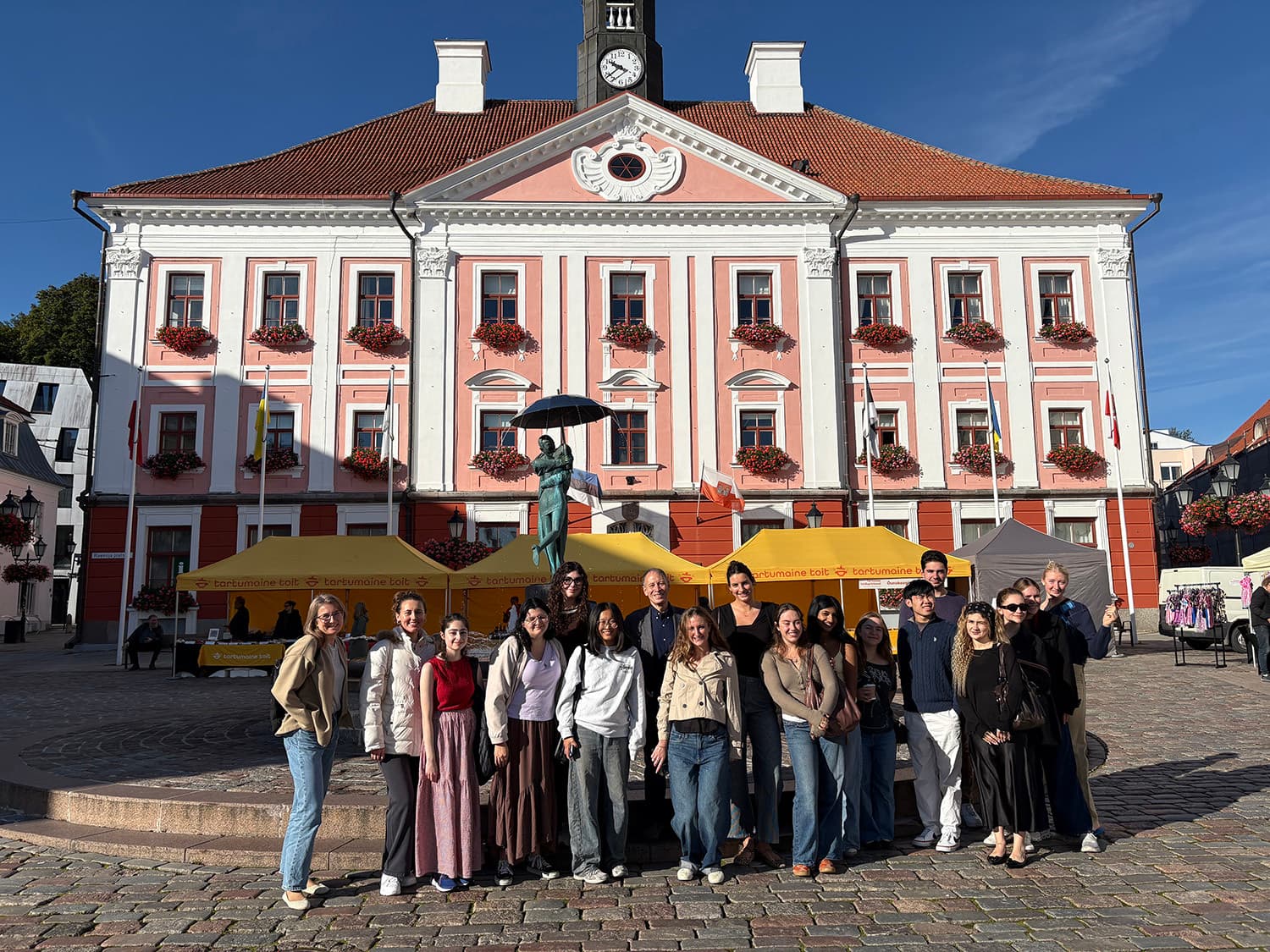
In September 2026, Bing Overseas Studies Program’s Global Seminar, entitled “Freedom is not Free: The History and Memory of Estonia and Latvia,” took fifteen Stanford undergraduates to Estonia and Latvia to explore the region’s history, society, politics, and culture. The three-week intensive academic program, co-led by Associate Professor Amir Weiner and Stanford University Libraries’ Curator for Estonian and Baltic Studies Liisi Esse, gave participating students a chance to explore the countries’ capitals Tallinn and Riga, with additional excursions to Tartu, Estonia’s historic university town, and Narva, a border city between Estonia and Russia. “BOSP Global Seminars are a wonderful opportunity for our students to learn more about a certain region by diving headfirst into discussions with local experts and visiting governmental, research, and cultural institutions,” said co-faculty lead Esse.


Focusing on the question of freedom—how it has been lost, gained, and sustained in Estonia and Latvia—the seminar began by developing a nuanced understanding of the region’s twentieth-century history and memory. Lectures and discussions co-led by faculty leads Weiner and Esse, as well as with guest speakers Marek Tamm, Rein Raud, and Kristo Nurmis, looked at how Baltic twentieth-century history and collective memory differ from the narrative prevalent in the Western countries, and how the long-lasting effects of Soviet repressions, cultural suppression, forced migration practices, and Russia’s continued use of World War II-related propaganda shape the region today. Guided visits to history museums further explored how the narratives of loss, resistance, and restoration are remembered and portrayed.

The program detailed the region’s contemporary geopolitical challenges. Lectures by leading experts on security, politics, and diplomacy, such as Marek Kohv, Piret Ehin, Kaarel Piirimäe, Daunis Auers, and Una Beržina-Čerenkova, allowed the students to learn about Russia’s full-scale invasion of Ukraine and the escalation of hybrid warfare practices in the Baltics, including disinformation campaigns, the Russian ethnic minority question, and the region’s engagement with China. Security briefings at the Ministries of Foreign Affairs and discussions with government leaders, such as Latvia’s Minister of Foreign Affairs, Baiba Braže, and Deputy Speaker of the Latvian Parliament, Zanda Kalniņa-Lukaševica, helped students understand everyday government practices and messaging related to these critical questions.


The seminar highlighted the region’s role in sustaining freedom through cutting-edge ideas and initiatives, as well as culture. A visit to Estonia’s e-Governance Academy and a discussion with leading e-governance and cybersecurity experts Luukas Ilves, Anna-Greta Tsahkna, Merle Maigre, and Ivo Visak explored Estonia’s leading role in e-governance and in developing the national AI program, “AI Leap,” for public schools.

Additional discussions with dinner guests in Estonia and Latvia explored sustainability and smart cities, the region’s startup and entrepreneurship culture, and societal resilience. Exploring the countries’ art and national museums, key government buildings, old towns, the Arvo Pärt Centre, Riga’s Art Nouveau district, and the National Library of Latvia gave students a nuanced understanding of the region’s art, music, and architecture.

For most participating students, the global seminar was their first opportunity to visit and learn about Estonia and Latvia. Honor Warburg, a senior majoring in history, said about the program:
“I can confidently say the three weeks I spent in the Baltics were the highlight of my year. As a history student, I found it especially meaningful to learn about these countries’ histories where they happened. The resilience and pride of the Estonian and Latvian people left a lasting impression on me, and their commitment to preserving their memory and identity is deeply inspiring. I’m thankful to everyone who helped make this trip so rewarding, and I will carry what I learned there with me for a very long time and in a way studying in the classroom couldn’t quite capture.”
Abby Copeland, a master’s student in public policy, shared:
“The Baltics Global Seminar program was one of the most academically transformative experiences of my undergraduate career. Through the incredible lectures, museum visits, and cultural experiences on the trip, I found myself evaluating and reevaluating the fundamental questions of how democracies come to be, what threatens them most, and, most vividly, what’s at stake if it’s lost. Every student, regardless of discipline, would learn tremendously from the Baltic story.”
Isabella Meyer, a junior majoring in international relations and history, reflected:
“Stanford’s Global Seminar in Estonia and Latvia changed how I think about historical memory, sovereignty, and cultural exchange. Hearing directly from ministers, scholars, and community leaders showed me how state institutions and the Baltic people have risen to the challenges set before them. The teaching team was incredible and consistently went above and beyond to give us the best experience possible, whether at dinners or on walks to site visits. I knew that no matter the question, one of our trip leaders would have a thoughtful or thought-provoking insight. The trip was filled with unique site visits and individuals I would not have had the opportunity to see otherwise, from the border city of Narva to a discussion with Latvia’s Foreign Minister. I recommend this Global Seminar to any student looking to explore the Baltic region, especially students interested in post-Soviet history, national security, and cultural memory.”
By the end of the three weeks, co-faculty lead Esse shared, “We are thrilled that after careful planning, we were able to offer this opportunity to our students in the Baltic states, and we hope that this won’t be the last of such opportunities in this region. In any case, Estonia and Latvia are happy to have fifteen new young friends and ambassadors who understand the countries’ key topics and viewpoints.”
The program was supported by Destination Partners and Vabamu Museum of Occupations and Freedom (Kadri Paju, Lisa Trei).